


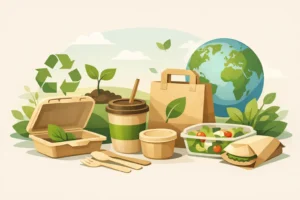
If you’re reviewing takeaway packaging for a cafe, bakery, restaurant or event business, one question comes up quickly – what is biodegradable food packaging, and does it actually suit day-to-day service? The short answer is that biodegradable food packaging is designed to break down naturally over time through the action of microorganisms such as bacteria and fungi. The longer answer matters more, because performance, disposal conditions and food type all affect whether it is the right commercial choice.
For hospitality operators, this is not just a sustainability question. It is also about product fit, food protection, storage, presentation and customer expectations. A pack that sounds eco-friendly on paper still needs to handle heat, grease, moisture and transport without slowing service or creating waste issues on site.
What is biodegradable food packaging in practical terms?
In practical foodservice terms, biodegradable food packaging is packaging made from materials that can decompose into more natural substances under the right conditions. That may include plant-based fibres, paper-based materials, bagasse, PLA-lined products and some bioplastics, depending on the item and how it is manufactured.
The key phrase here is under the right conditions. Biodegradable does not always mean a product will break down quickly in a standard rubbish bin, landfill or the open environment. Some materials need commercial composting conditions with controlled heat, moisture and oxygen. Others may degrade more slowly, even if they are still considered biodegradable.
That is where buyers can get caught out. A product can be a better environmental option than conventional plastic in some applications, but the claim only has real value when it matches how the packaging will actually be used and disposed of.
Biodegradable, compostable and recyclable are not the same
These terms are often grouped together, but they solve different operational problems.
Biodegradable means a material can break down naturally over time. Compostable usually means it can break down into organic matter within a defined timeframe and under specific composting conditions, often commercial ones. Recyclable means the material can be collected, processed and made into new products, provided the local recycling stream accepts it and the packaging is clean enough.
For a hospitality business, the difference matters. A clear cold cup made from a compostable bioplastic may sound ideal, but if your venue has no composting collection and customers throw it into general waste, the environmental benefit may be reduced. On the other hand, a recyclable paper-based product can also underperform if it is heavily contaminated with food.
That is why packaging selection should be based on the full picture – food type, service model, disposal pathway, price point and stock consistency.
Common materials used in biodegradable food packaging
Paper and paperboard are among the most familiar options. They are widely used for bags, sandwich wedges, bakery boxes, trays and takeaway cartons. They present well, are easy to brand and work across many dry or lightly greasy foods. Depending on coatings and linings, their end-of-life pathway can vary.
Bagasse is another common material in foodservice. Made from sugarcane fibre, it is often used for plates, bowls, clamshells and meal containers. It has good rigidity and handles many hot foods well, which makes it popular for takeaway and event catering.
PLA, a plant-based plastic alternative, is often used in lids, cups, windows and cold food packaging. It offers the clean presentation many operators want for salads, desserts and chilled drinks. However, it is usually better suited to cold applications and often requires commercial composting rather than simple home disposal.
There are also starch-based materials and other fibre blends used in selected packaging lines. The exact performance will depend on the product design, wall thickness, barrier treatment and intended use.
Where biodegradable packaging works well
Biodegradable food packaging tends to work best where the foodservice application is predictable. Think bakery items, sandwiches, wraps, muffins, slices, burgers, chips, salads and plated meals for takeaway. In these settings, there are reliable product formats that balance presentation and practicality.
It also suits businesses that want their packaging choices to visibly support a sustainability position. Customers notice paper bags, fibre containers and natural-look serviceware. For many venues, that supports brand image as much as it supports waste reduction goals.
Cafes and quick-service venues often find good results with biodegradable options for carry trays, food trays, napkins, paper bags and selected takeaway containers. Caterers and event operators can also benefit where there is a clear waste management plan and a strong preference for disposable serviceware that looks cleaner and more considered than standard plastic.
Where the trade-offs show up
Not every biodegradable option is the best fit for every menu item. Greasy foods, high-moisture dishes, long delivery times and very hot contents can expose the limits of some materials. If a container softens too quickly, leaks in transit or loses heat retention, the cost of damaged food and poor presentation can outweigh the sustainability benefit.
Shelf life is another factor. Some biodegradable products are more sensitive to humidity and storage conditions than traditional plastic packaging. If your business buys in volume, stock rotation and storage environment matter.
Price also remains part of the decision. Eco-conscious packaging can carry a higher unit cost, especially for specialised formats or custom branding. That does not make it poor value, but it does mean buyers should compare total operational value rather than look only at the carton price.
There is also the customer disposal issue. If end users do not understand whether a product belongs in compost, recycling or general waste, contamination can increase. Clear internal policy and simple customer-facing disposal messaging can help, but they need to be realistic.
How to assess what is biodegradable food packaging for your business
A good buying decision starts with the menu, not the material claim. Look at what the packaging has to do in service. Does it need to hold hot food for twenty minutes or ninety? Does it need to resist oil, steam or dressing leakage? Will it be stacked, delivered or displayed in a cabinet?
From there, check the material specification carefully. Ask whether the product is biodegradable, compostable or both. Confirm whether it is designed for hot or cold use. Review lid fit, grease resistance, moisture barrier and transport durability. For high-volume venues, consistency between cartons is just as important as the environmental label.
It also helps to match packaging to the disposal setup you can realistically support. If your business or site has access to commercial composting, that opens up more suitable options. If it does not, you may need to focus on materials that still perform well while improving overall packaging mix in other ways.
This is where working with a supplier that understands both packaging categories and hospitality operations can save time. Businesses buying across takeaway packaging, tableware, cleaning and front-of-house essentials often need practical advice, not just a product list. Packaging Pro supports that kind of purchasing with a broad commercial range built around foodservice use.
What buyers should look for before ordering
For wholesale buyers, sample testing is worth the effort. Trial the packaging with actual menu items during a normal service period. Test hot holding, delivery handling, refrigeration and customer handoff. What looks fine on a bench can perform differently once it is filled, sealed and carried out the door.
You should also consider how the packaging fits your broader operation. Natural fibre containers may support your sustainability messaging, but they also need to stack efficiently, store neatly and work with your service speed. For branded venues, print quality and presentation may be part of the decision too.
Finally, watch for vague claims. The better product information is specific about material type, use case and disposal pathway. That helps procurement teams make decisions that support both compliance and customer experience.
Why demand keeps growing
Customer expectations have changed. Many diners now notice the packaging almost as quickly as the food. Businesses are under pressure to reduce visible plastic, support sustainability commitments and keep up with shifts in venue standards, event requirements and procurement policies.
At the same time, operators still need packaging that protects food, maintains hygiene and arrives on time through a reliable wholesale channel. That is why biodegradable food packaging is gaining traction – not as a trend item, but as part of a more practical, better-aligned packaging mix.
The strongest results usually come from choosing the right format for the right food, rather than trying to switch every packaging line at once. If your next packaging review starts with function first and sustainability close behind, you will make better buying decisions and get more value from every carton.
